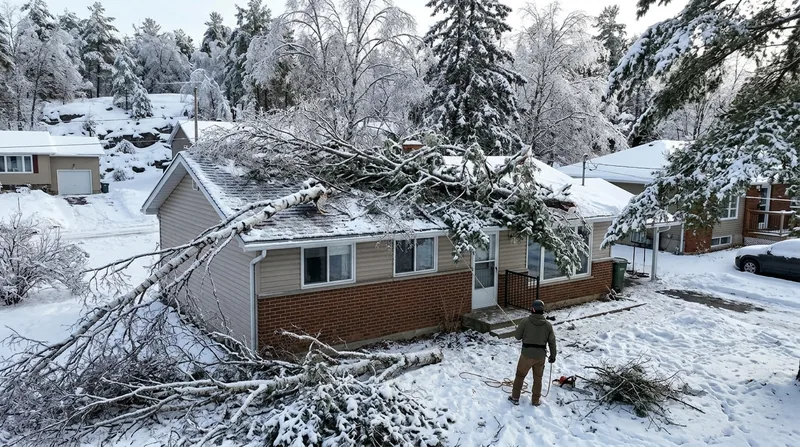




After a windstorm or an ice storm rolls through the Sudbury area, the damage is rarely evenly spread. One street in Downtown loses a maple limb onto a driveway, while a ravine lot off the nearby ridge has a spruce leaning over a roof. Storm damage cleanup in Sudbury is the work of getting hazard limbs down, getting debris off the property, and deciding which trees can be saved before the next weather system arrives. We have run crews out of this city since 2011, and we work with ISA Certified Arborists on staff. The rocky, shallow soil across the Sudbury area means root plates hold poorly after heavy rain, so a tree that looks upright can still be a candidate for failure. Our job is to make the property safe first, then sort out what can be pruned and what has to come down. For scheduled structural work outside of storm season, see our tree pruning service.
Why storm damage cleanup cannot wait in Sudbury
A hanging limb over a walkway or service entrance is not a cosmetic problem. After freezing rain, the weight of ice on a mature silver maple can split a co-dominant stem without warning, and the piece that comes down next may land on a vehicle, a fence or a hydro service line. In the Sudbury area, lots with shallow bedrock and clay soil hold water after a thaw, which loosens root plates on spruce and birch. The first 48 hours matter for another reason: wet snow and wind-loaded branches keep shifting, so a limb that is stable at noon can drop by evening.
- We remove hanging and broken limbs that threaten roofs, driveways and walkways.
- We assess split trunks and uprooted trees to decide between cabling, pruning and removal.
- We clear fallen brush and branches from lawns, fences and access paths.
- We prune damaged crowns so the tree can compartmentalize the wound and recover.
- We document the damage with photos for your insurer, without making any promise about coverage.
Every visit starts with a hazard walk of the property, so the crew knows which trees are load-bearing and which are simply messy. For trees that are already failing and cannot be saved, our emergency tree removal service takes over.
Key fact: A typical post-storm call in the Sudbury area involves two to four damaged trees and one or two hazard limbs over a structure. Crews usually need half a day to a full day on site, and chipping is done the same visit so the lawn is left clear.
For guidance on preparing for severe weather and downed trees, see Environment and Climate Change Canada.
How our crews handle a storm-damaged property
Storm work is sequenced, not improvised. The crew leader sets a drop zone, confirms where the private service entrance enters the house, and checks the ground for anything that changes the plan: a septic bed, a buried cable, a shed roof. We climb or use a bucket where access allows, and we rig limbs down rather than letting them fall free when a structure is underneath. The sequence below is the one we follow on most residential calls in the Sudbury area.
- We secure the site and mark the drop zone before any saw starts.
- We remove the highest hazard limbs first, working from the top down.
- We assess the remaining trunk and root plate for stability and decide on cabling, pruning or removal.
- We prune clean wounds on damaged crowns with proper cuts at the branch collar.
- We chip brush on site and leave the firewood cut to a length you choose.
- We rake the work area and walk the property with you before leaving.
The same sequence applies whether the call comes from a post-war subdivision in The Donovan or a rural property toward French River. For properties where the storm has left a large volume of brush, our brush chipping service can be booked as a follow-up.
Key fact: After a summer windstorm, a common call in Sudbury involves a red oak with a split co-dominant stem over a driveway. Cabling and bracing can save the tree when the split is below the crown and the wood is sound. When the split runs into the main trunk, removal is the safer option, and we explain why on site.
Methods we use after a storm
The method depends on where the tree sits, how much room the crew has and whether the wood is under load. A backyard reachable only through a standard gate rules out heavy equipment, so the work is done by climbing and rigging. A ravine lot with steep access changes the rigging plan again. The table below sets out the four methods we use most often on storm-damaged properties across the Sudbury area.
| Method | Description | Context |
|---|---|---|
| Climbing and rigging | A climber works the crown and lowers limbs on ropes to a ground crew. | Tight backyards and trees over roofs or fences. |
| Bucket truck access | An aerial lift positions the cutter at the damaged limb without climbing. | Street trees and driveways with clear truck access. |
| Cabling and bracing | Steel cables and rods support a split or weak union so the tree can stay standing. | Sound wood with a repairable split in the crown. |
| Sectional removal | The tree is taken down in pieces when the root plate or trunk is unstable. | Uprooted trees and trunks with advanced decay. |
Choosing the right method is what keeps the work safe and the cost predictable. For a repair that preserves a tree rather than removing it, see our cabling and bracing service.
Permits, safety distances and debris on storm calls
Storm damage does not suspend the rules. The City of Sudbury may require a permit for a private tree removal, and the application is normally supported by an arborist report, so we flag that early when a removal is on the table. Rules and thresholds differ from one municipality to the next across the Sudbury area, which is why we confirm the local requirement before the crew arrives. Near the private service entrance, we respect the required approach distances and keep our work on the customer's side of the wire. If a tree is touching the public distribution network, the file is referred to your local utility or Hydro One, and we do not touch that line. Brush and wood are chipped or cut on site and either left for you or hauled away, depending on what you choose. If you need a report for a permit application, our arborist report service covers that step.
What storm cleanup costs in the Sudbury area
Pricing on storm work depends on access, height and how much wood has to be rigged rather than dropped. A single hazard limb over a driveway is a short call. A property with three damaged trees, a split trunk and a brush pile is a full day. We give a free estimate on site so the number is tied to the actual work, not to a phone description. The full rate structure is on our pricing page.
Key fact: Most residential storm calls in Sudbury fall between $350 and $1,200 for hazard limb removal and debris clearing. A full removal of an uprooted mature tree with rigging typically runs from $1,200 to $3,500, depending on access and proximity to structures.
If the damage is severe enough that a tree is already failing, call (249) 806-5249 and describe what is leaning and what is underneath it. For non-urgent work, the contact page is the fastest way to book a free estimate.
Prices Storm Damage Cleanup in Sudbury — Indicative pricing
| Service | Price | Details |
|---|---|---|
| Hazard limb removal | From $350 | Removal of one or two hanging or broken limbs over a structure, with rigging and cleanup. |
| Storm debris clearing | From $550 | Clearing fallen brush and branches from lawns, fences and access paths, with on-site chipping. |
| Damaged crown pruning | From $450 | Clean pruning cuts on a storm-damaged crown to help the tree recover. |
| Uprooted or split tree removal | From $1,200 | Sectional removal of an unstable tree, including rigging and debris disposal. |
| Cabling and bracing | From $700 | Steel cable and rod support for a repairable split or weak union. |
| Free estimate | Free | On-site assessment in Sudbury and the surrounding area, response within 24 hours at (249) 806-5249. |
Indicative prices; free, personalized estimate within 24h at (249) 806-5249.